Guide · Central Florida
What to do in the first 24 hours after water damage in a Florida home
 24/7 response · IICRC certified
Short answer
Stop the water at the main shut-off valve, turn off power to wet rooms if you can reach the breaker safely, photograph everything before moving it, and start drying within 24 hours. In Florida humidity, mold can begin growing on wet drywall and carpet pad in 24 to 48 hours, so the first day decides how much has to be torn out.
Key takeaways
- Shut off the water first, then the power to wet areas.
- Photograph and video every room before cleaning up.
- Call your insurer to open a claim, but do not wait for the adjuster to start drying.
- Professional drying within 24–48 hours is what prevents mold.
Step 1: Stop the water and make the house safe
Find the main water shut-off. In most Central Florida homes it is near the water meter by the street, in the garage, or where the line enters the house. Turn it clockwise until it stops. If the leak is from a water heater, also turn off its gas valve or breaker.
If water is near outlets, power strips or appliances, switch off those circuits at the breaker panel, but only if you can reach the panel without standing in water. If you cannot, wait for help.
Step 2: Document everything before you clean
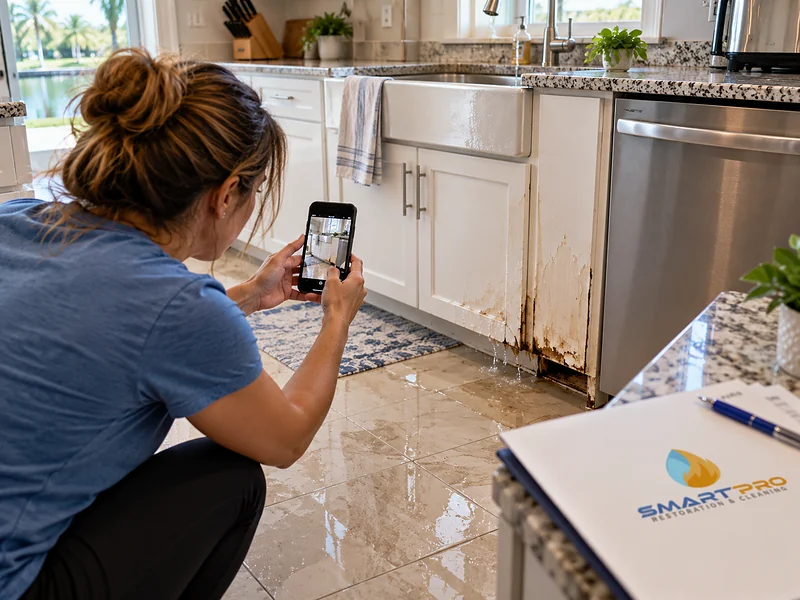
Insurance claims are paid on evidence. Before you mop, move furniture or throw anything away:
- Take a slow video walking through every affected room.
- Photograph the source of the leak (the burst pipe, failed supply line, overflowing pan).
- Photograph water lines on walls, cabinets and baseboards.
- Keep damaged items until the adjuster says they can go.
Step 3: Report the claim and call a restoration company
Call your insurance company or use their app to open a claim and write down the claim number. Most homeowners policies expect you to take reasonable steps to prevent further damage, so you do not need to wait for the adjuster before drying starts. In Florida you choose your own restoration contractor.
Step 4: Start drying in the first 24 hours
Opening windows rarely helps in Florida because outdoor air is often more humid than indoor air. Keep the AC running if it is safe, and move rugs and furniture off wet floors.
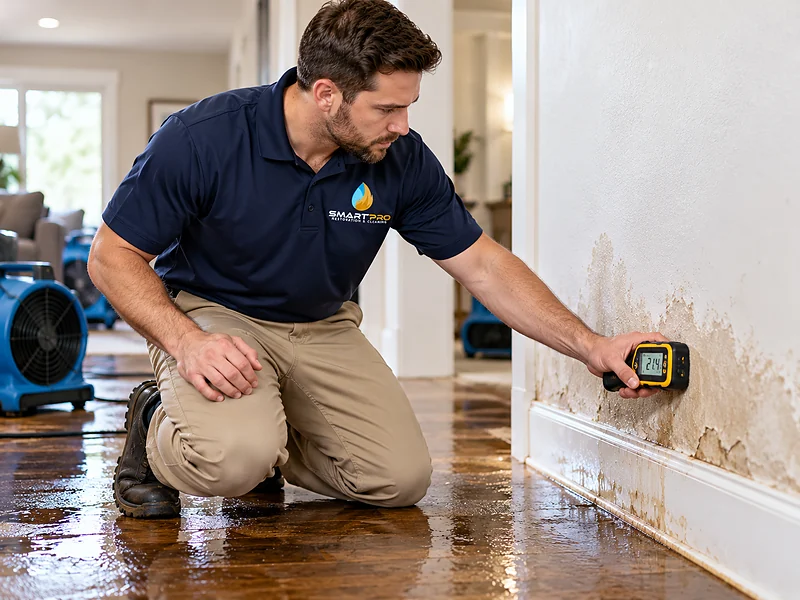
Professional drying uses moisture meters and thermal imaging to find water inside walls and under floors, then commercial dehumidifiers and air movers to bring materials back to a dry standard. Readings are logged every day, which also supports your claim.
What not to do
- Do not use a household vacuum on standing water.
- Do not turn on ceiling fans or lights in rooms with wet ceilings.
- Do not paint over or bleach stains; it hides moisture that is still there.
- Do not throw out damaged items before they are documented.
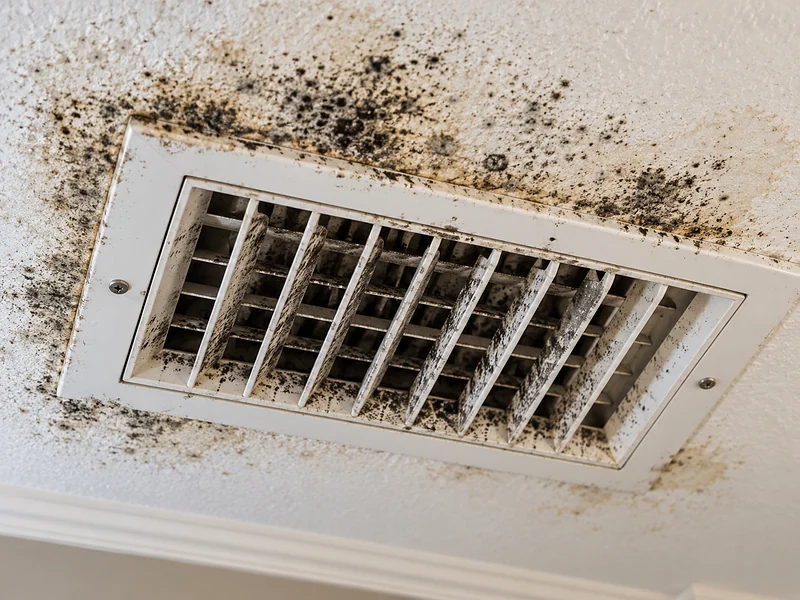
How fast does mold grow after a leak in Florida?
Mold needs moisture, a food source like drywall paper or wood, and warmth. Central Florida homes have all three most of the year. Growth can start in 24 to 48 hours on wet porous materials, which is why the drying window matters more here than in drier climates.
Frequently asked questions
Should I call insurance or a restoration company first?
If water is still spreading, call a restoration company first so mitigation starts, then report the claim the same day. Quick mitigation protects your claim.
Can I dry water damage myself?
Small surface spills, yes. Water that soaked into drywall, baseboards, carpet pad or under cabinets usually needs moisture readings and commercial dehumidifiers, because what looks dry on the surface can still be wet inside.
How long does professional drying take?
Most rooms take 3 to 5 days. Dense materials like hardwood, plaster and concrete slab can take longer. Equipment should come out only when daily readings show the materials are dry.
Related services
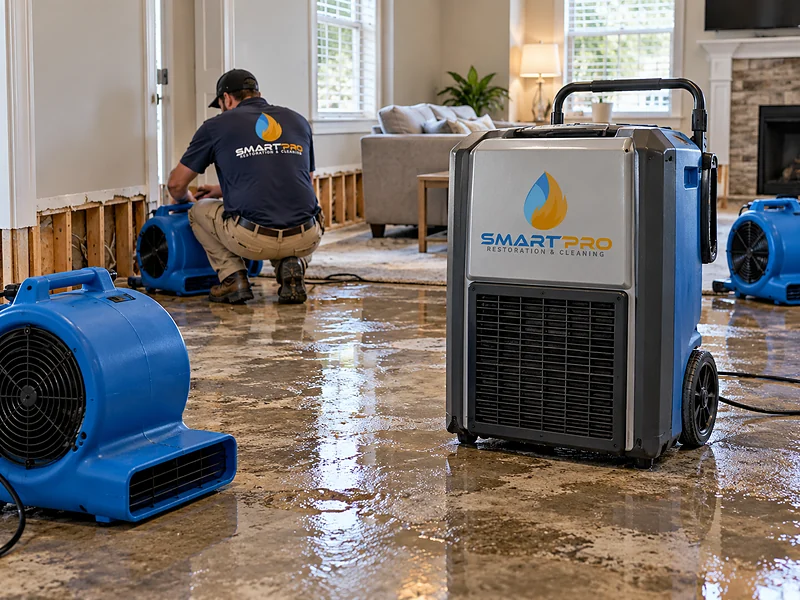
Water Damage Restoration
Burst pipes, AC leaks, water heater failures and flooding. Extraction, structural drying and repairs.
Learn more →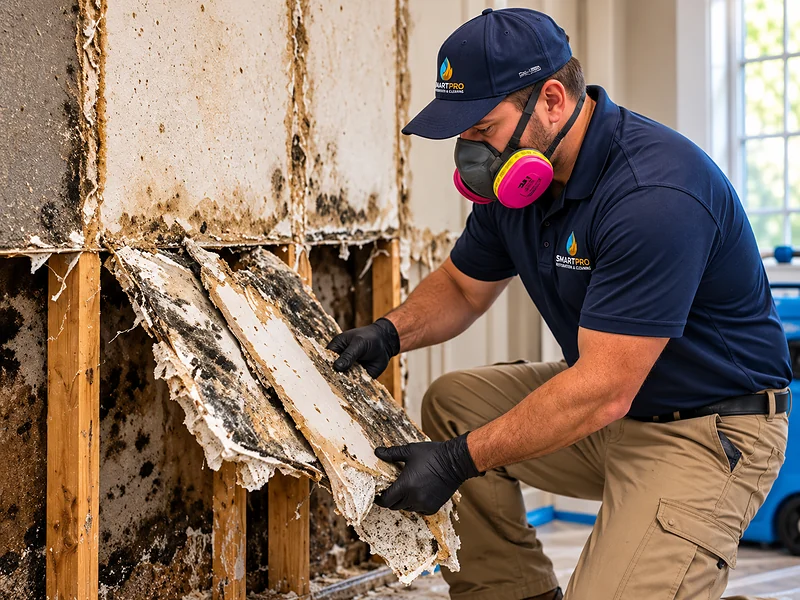
Mold Remediation
Licensed Florida mold remediation with containment, HEPA air filtration and clearance-ready results.
Learn more →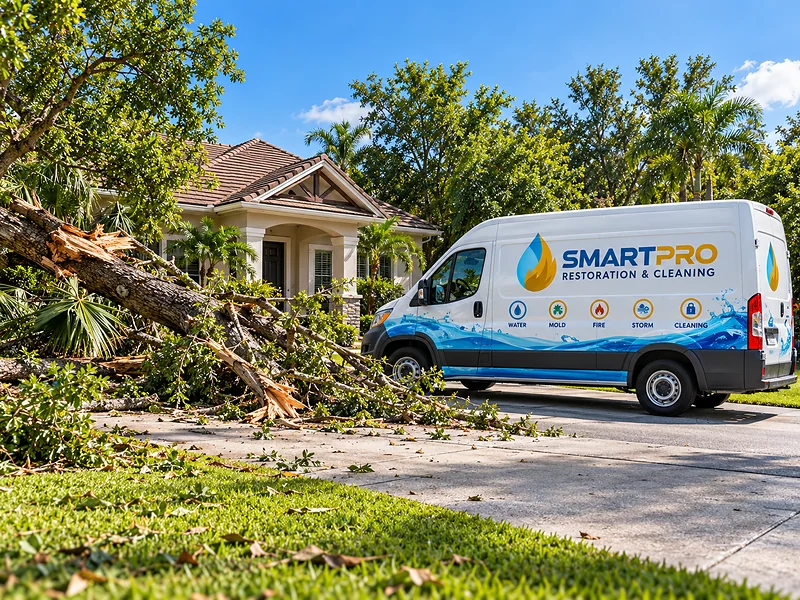
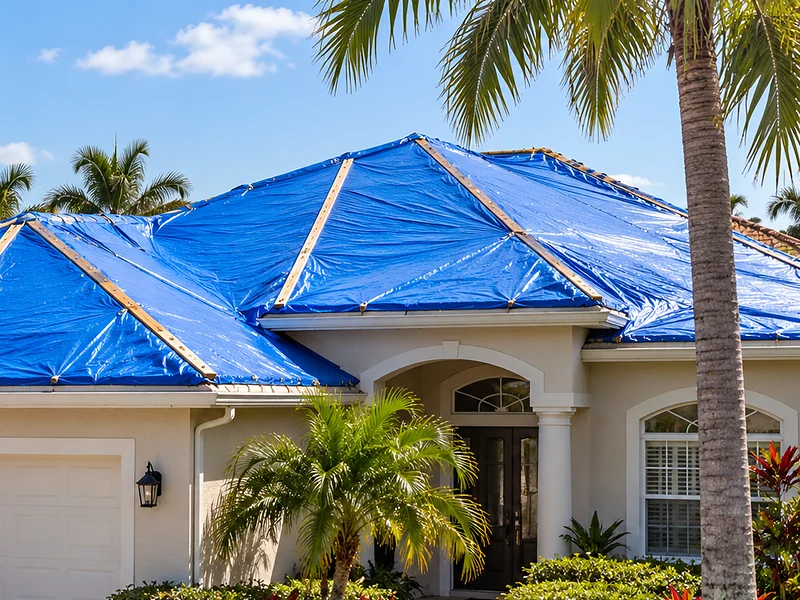
Storm & Hurricane Damage
Hurricane, tropical storm and wind damage: tarping, water removal, drying and rebuild.
Learn more →