Guide · Central Florida
Why is there mold on my AC vents, and how do I fix it?
 24/7 response · IICRC certified
Short answer
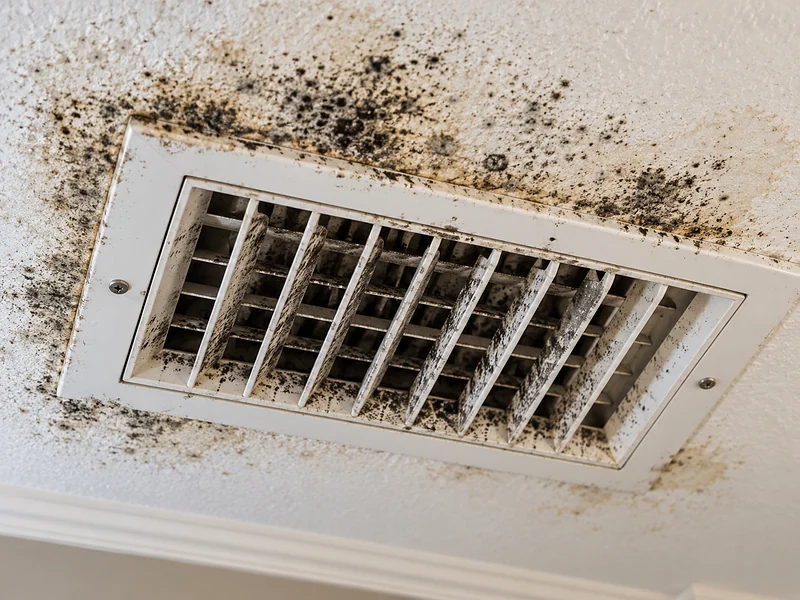
Mold on AC vents in Florida is almost always caused by condensation: cold supply air meets warm, humid indoor air at the register and leaves moisture behind. A dirty coil, a clogged condensate drain, leaky or poorly insulated ducts, or an oversized system that short-cycles make it worse. Cleaning the vent fixes the symptom. Fixing the airflow and humidity fixes the cause.
Key takeaways
- Spots on registers usually mean condensation, not a failing house.
- Check the air handler, coil, drain pan and condensate line first.
- Rigid metal ducts can usually be cleaned; moldy flex duct is usually replaced.
- Indoor humidity should stay roughly between 40% and 60%.
Common causes in Central Florida homes
- Supply registers sweating because the air coming out is much colder than the room.
- Ducts in a hot attic with torn or thin insulation that sweat on the outside.
- A clogged condensate drain line that lets the pan overflow inside the air handler.
- A dirty evaporator coil or filter that restricts airflow.
- An oversized AC that cools fast but shuts off before it removes humidity.
Is mold on AC vents dangerous?
A few spots on a register are common and not an emergency, but mold spreading inside the ducts or air handler distributes spores through the whole house every time the system runs. If you see growth inside the duct, smell mustiness when the AC starts, or have repeated spots after cleaning, the system needs an inspection.
Clean or replace? How we decide
| Component | Usually |
|---|---|
| Registers and grilles | Cleaned, or replaced if rusted |
| Rigid sheet-metal duct and plenums | HEPA negative-air cleaning |
| Flex duct with mold growth on the inner liner | Replaced |
| Air handler cabinet, coil and drain pan | Cleaned and treated; drain line cleared |
How to prevent it from coming back
- Change the filter on schedule and use the size the system calls for.
- Keep the condensate line clear; many techs add a float switch to shut the AC off before the pan overflows.
- Seal and insulate attic ductwork.
- Keep indoor humidity around 40–60%; a dehumidifier or a properly sized system helps.
Why mold companies and AC companies need to work together
Most mold companies stop at the walls and most AC companies do not do mold remediation. Smart Pro handles the remediation and coordinates the AC work with a state-certified Florida AC contractor, so the room and the system are fixed in the same job.
Frequently asked questions
Can I clean moldy AC vents myself?
You can wipe surface spots on a register with a mild detergent. Do not spray bleach into ducts. If growth comes back or is inside the duct, have the system inspected.
Does duct cleaning remove mold?
Proper HEPA negative-air cleaning removes growth from rigid ducts. It does not reliably clean flex duct liners, which are usually replaced when mold is present.
How much humidity is too much in a Florida house?
Above about 60% indoor relative humidity for long periods raises the risk of mold. A simple hygrometer shows where your home stands.