Guide · Central Florida
Roof tarp or shrink wrap after storm damage: which is better?
 24/7 response · IICRC certified
Short answer
A properly installed roof tarp is the right choice for small or medium damage that will be repaired within a couple of months; it typically lasts 60 to 90 days in Florida sun. Shrink wrap is better for large damaged areas, flat or commercial roofs, or when the permanent repair is months away, because it is heat-sealed into one continuous skin with no edges for wind to lift.
Key takeaways
- Tarp: faster and cheaper, best for limited damage and short timelines.
- Shrink wrap: seamless, more wind resistant, lasts many months.
- Both are emergency mitigation that insurers generally expect you to do.
- Photograph the roof before anything is covered.
Side-by-side comparison
| Roof tarp | Roof shrink wrap | |
|---|---|---|
| Best for | Small to medium damage | Large damage, flat or commercial roofs |
| Typical lifespan in Florida | About 60–90 days | About 6–12 months |
| Wind resistance | Good when battened over the ridge | High; no seams or loose edges |
| Install time | Hours | Longer; heat sealing and strapping |
| Cost | Lower | Higher |
What a good tarp installation looks like
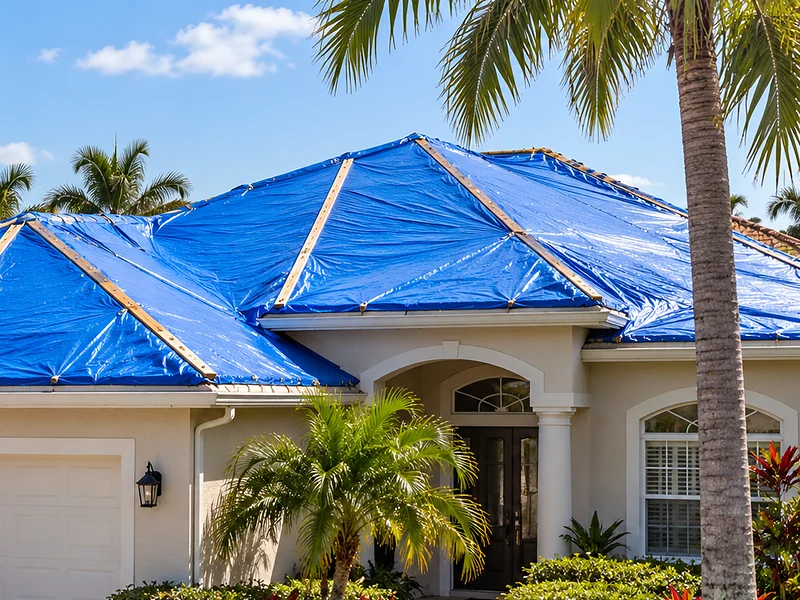
A tarp held down with bricks or sandbags often blows off in the next afternoon storm. A proper install runs the tarp over the ridge and fastens it with wood battens along the edges so wind cannot get underneath.
When shrink wrap makes more sense
- Roofers are backlogged after a hurricane and replacement is months out.
- The damaged area is too large for one tarp.
- Flat or low-slope commercial roofs with several leak points.
- The claim is still being negotiated and the roof needs reliable protection meanwhile.
Insurance and documentation
Emergency tarping and shrink wrap are mitigation, which most policies expect you to do to prevent further damage. Keep the invoice and the before-and-after photos with your claim.
Frequently asked questions
How soon after a storm should I tarp my roof?
As soon as it is safe. Every rain through an open roof adds interior water damage and mold risk.
Can I tarp my own roof?
Working on a wet, damaged roof is dangerous. If you do it yourself, never work alone or in wind, and secure the tarp with battens instead of loose weights.
Will insurance pay for shrink wrap?
When it is reasonable and necessary mitigation for a covered loss, it is commonly included. Ask your adjuster and keep the documentation.
Related services
Emergency Roof Tarping
Fast, secured roof tarps after storms, fallen trees or fire to stop water getting inside.
Learn more →Roof Shrink Wrap
Heat-sealed shrink wrap for large or long-term roof damage on homes and commercial buildings.
Learn more →
Storm & Hurricane Damage
Hurricane, tropical storm and wind damage: tarping, water removal, drying and rebuild.
Learn more →